Catalina Foothills & North Tucson

Built into the Foothills
The Catalina Foothills are defined by elevation. Rising from River Road toward the Santa Catalina Mountains, the land is shaped by ridges, canyons, rocky outcroppings, and desert washes. Roads follow the contours rather than a grid, and homes are positioned in response to slope, privacy, and view.
The area’s architectural identity began taking shape in the 1920s, when developer John Murphey acquired large tracts of foothills land and imagined low-density neighborhoods that would preserve the existing terrain and native vegetation. Working with Swiss-born architect Josias Joesler, Murphey established an approach to desert development that valued climate, craftsmanship, and a close relationship between buildings and land.
Joesler’s adobe and masonry residences remain central to the character of the Foothills. Their deep porches, shaded courtyards, thick walls, handmade details, and careful siting continue to influence the area’s architecture today.
WHAT TO LOVE
Homes designed around slope, orientation, and view
Important work by Josias Joesler and other regional architects
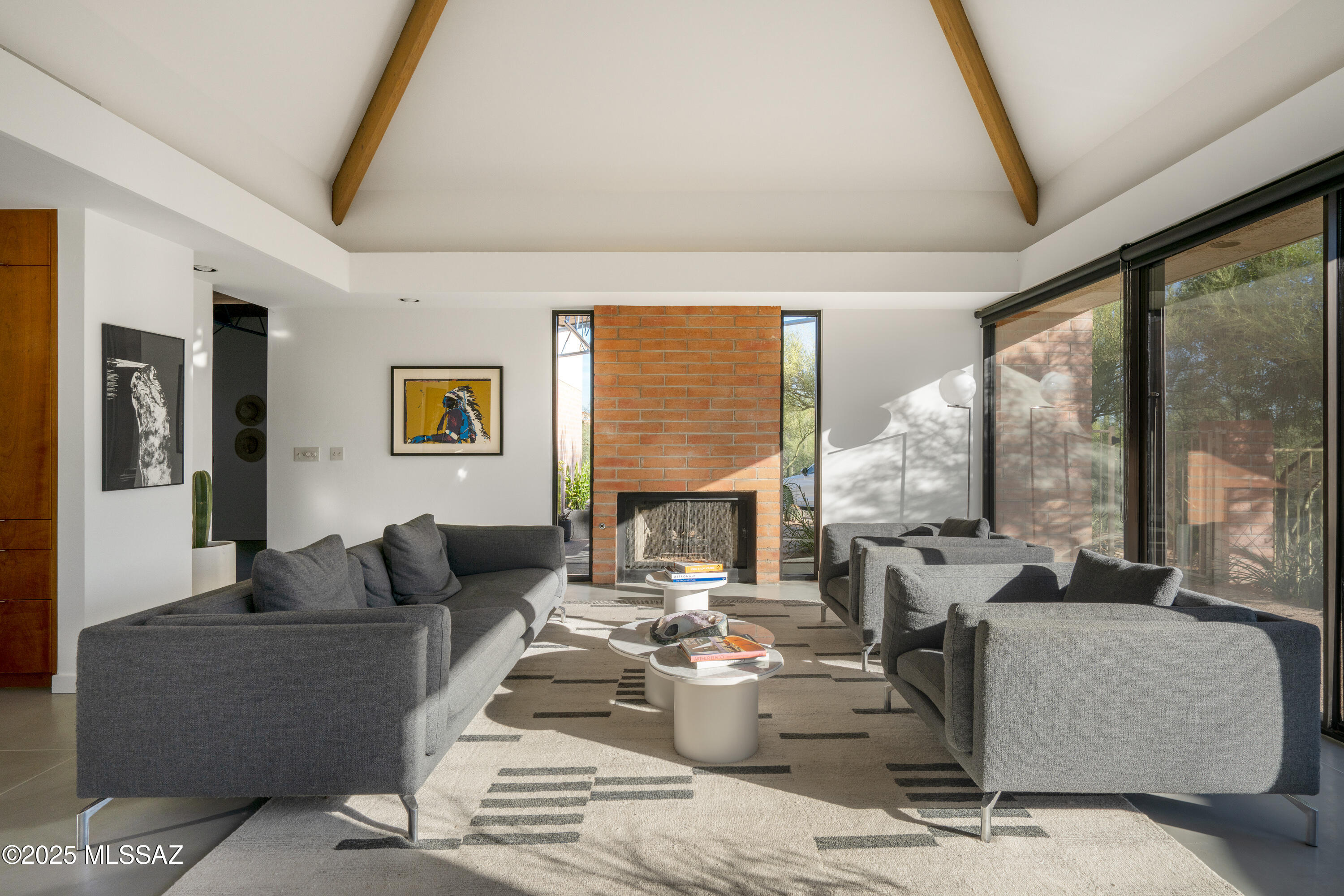
Adobe, masonry, midcentury, and contemporary desert architecture
Winding roads, natural washes, and preserved desert vegetation
Trailheads leading directly into the Santa Catalina Mountains
Historic resorts and cultural landmarks embedded within the landscape
LOCAL LIFESTYLE
Living in the Catalina Foothills means becoming familiar with the terrain. Morning light moves across the face of the Catalinas, washes carry water during the monsoon, and the city gradually reveals itself as the roads descend south.
The area is less a continuous neighborhood than a collection of enclaves shaped by different elevations and periods of development. Early Catalina Foothills Estates residences sit alongside postwar ranch homes, territorial houses, desert modernism, and contemporary architecture. The best homes share a sensitivity to their sites, whether modestly tucked into the vegetation or set along a ridge with expansive views.
DINING AND GATHERING PLACES
The Foothills’ gathering places are distributed along Campbell, Skyline, Sunrise, and Kolb rather than concentrated within a traditional center. La Encantada provides a central destination for dining and shopping, while smaller plazas and restaurants are woven throughout the surrounding streets.
Hacienda del Sol, Westin La Paloma, and Loews Ventana Canyon are more than resort destinations. Their gardens, courtyards, restaurants, and mountain settings form part of the architectural and social history of the Foothills.