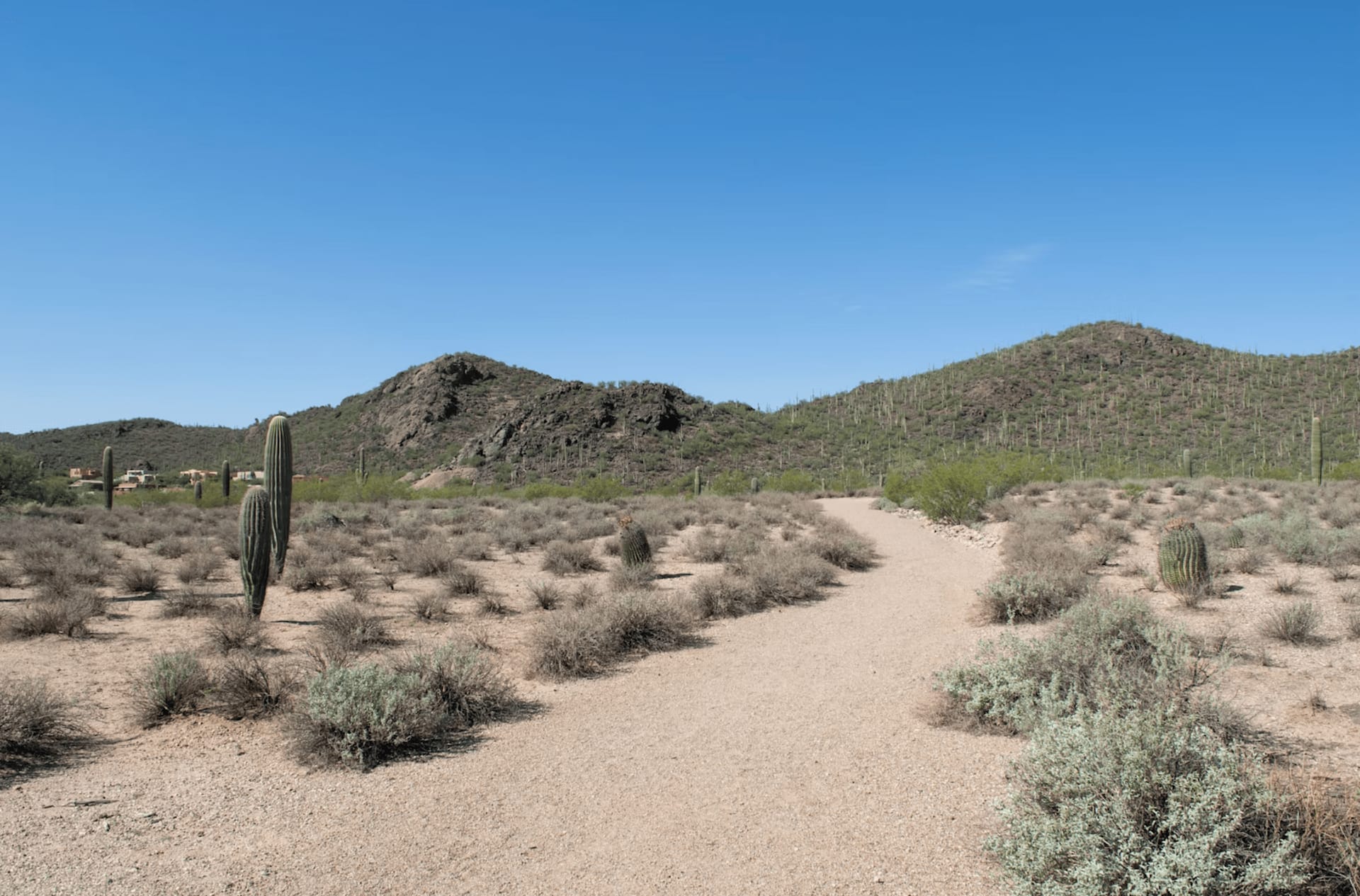

This 18.4-mile ride is on entirely paved multi-use paths from the Mercado District in Downtown Tucson to the Town of Marana. Alternatively, you could ride from Marana to Downtown Tucson. Ride this route to see multiple birding sites that were created using water reclamation, have some of the best food and drinks in the city, and experience a stretch of one of the longest and best-ranked multi-use paths in the country.
The Mercado District
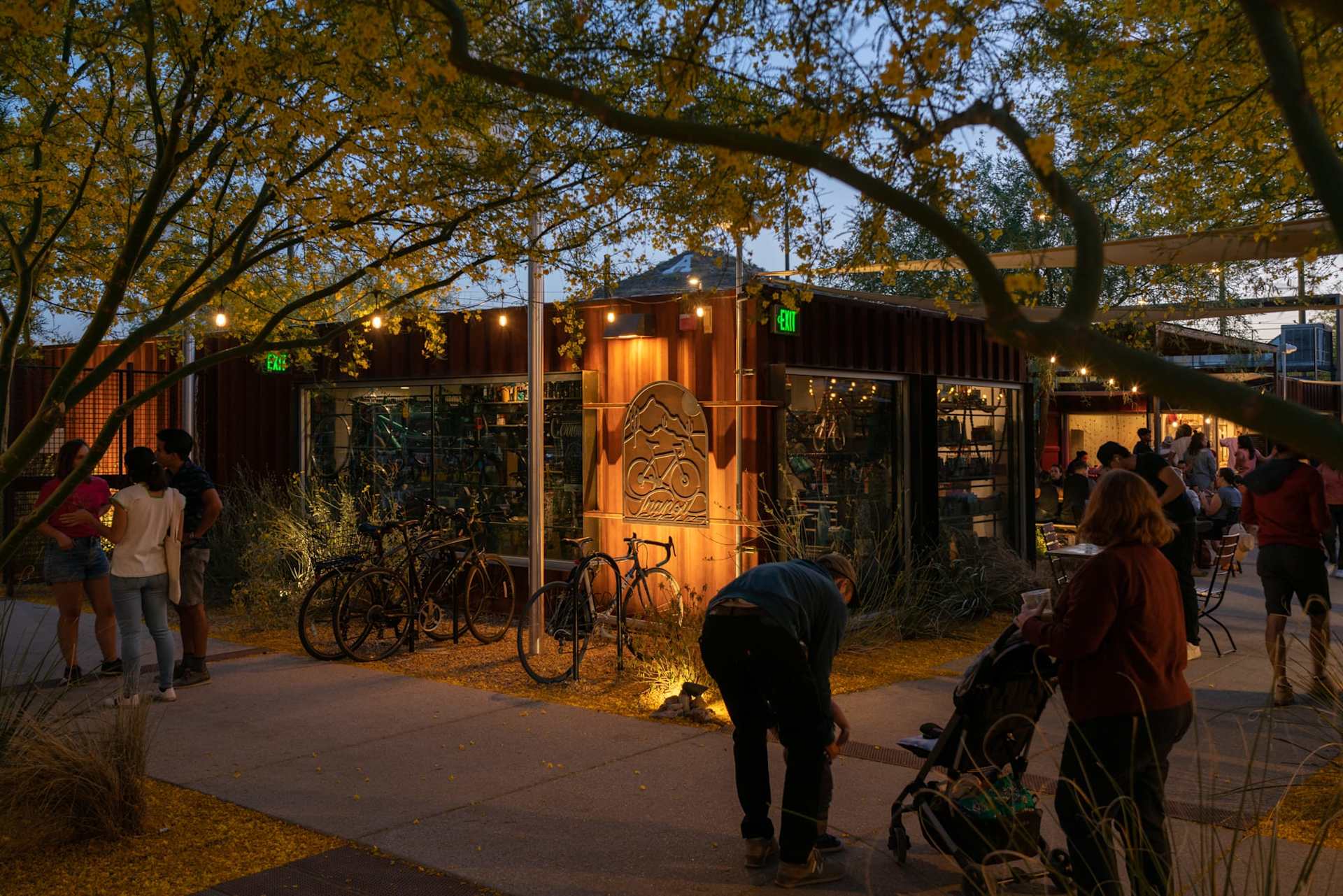
This is where you can have a pre-ride coffee and breakfast. We recommend Presta, Seis Tacos, and La Estrella Bakery. The Mercado District is a great place to start this long ride. Also, before heading out, ride around the row homes tucked in behind the district. This neighborhood is a new urbanist neighborhood with single-family homes, affordable apartments, market-rate apartments, and retail.
At the Annex within the same Mercado District is the bike shop Transit Cycles. Right around the corner is Decibel Coffee. A good place to get a tune-up before or after the ride. In this same collection of vendors, you can find bars, restaurants, and boutiques.
Pima Animal Care Center (PACC)
The Pima Animal Care Center (PACC) stands as a beacon of compassion and care in Tucson, making a profoundly positive impact on both the community and its animal residents. As a dedicated animal welfare organization, PACC not only provides a haven for lost, abandoned, or surrendered pets but also actively works towards reuniting them with loving homes. Through robust adoption programs, educational initiatives, and compassionate outreach efforts, PACC contributes to the overall well-being of Tucson's four-legged companions. By promoting responsible pet ownership, offering low-cost spaying and neutering services, and engaging in community partnerships, PACC not only enhances the lives of individual animals but fosters a more humane and connected community. In its unwavering commitment to the welfare of animals and the promotion of responsible pet care, Pima Animal Care Center embodies the spirit of compassion that resonates positively throughout Tucson.
Los Morteros
Los Morteros, a significant Native American village occupied from 850 to 1300 CE, spans along the Santa Cruz River, extending west of the current Silverbell Road right-of-way. Acting as the focal point for a community of related sites, the village derived its name from numerous bedrock mortars used for grinding seeds, corn, and plants. This historical site witnessed pivotal moments in southern Arizona’s past. The renowned 1775–1776 expedition of Spanish explorer Juan Bautista de Anza made a substantial encampment just north of Coachline Boulevard. In the 1800s, the “Pointer Mountains” Butterfield Stage Station emerged near Oasis Street and Coachline Boulevard. Los Morteros stands as a vital cultural resource, preserving an untouched reservoir of information about the Tucson Basin’s history. Recognized as an ancestral site by the Tohono O’odham Nation, it represents one of Pima County’s “Last of the Best” cultural resources. Acquired with 1997 bond funds and further supported in the 2004 bond election, the core area, Anza campsite, and historic stagecoach station (approximately 120 acres) are safeguarded as a Pima County Conservation Area. This protection ensures the preservation of these archaeological and historic treasures against encroaching development, securing them for the future of Pima County.
El Rio Preserve
Nestled within a sprawling 104-acre expanse, El Rio Preserve holds a rich history of diverse utility. In the 18th century, Juan Bautista de Anza and his followers found respite on this site during their expedition from Southern Arizona to San Francisco. Over time, the Arizona Department of Transportation repurposed the area as a gravel borrow pit, contributing to major infrastructure projects. In more recent decades, the landscape has been transformed by avid disc golfers who crafted a network of targets across the terrain. Nature, too, plays its part as periodic floodwaters from adjacent neighborhoods give rise to a seasonal lake, beckoning migratory birds to grace the preserve with their presence. El Rio Preserve is a testament to the convergence of history, recreation, and ecological beauty. The Audobon Society regularly hosts field trips at El Rio Preserve or the Sweetwater Wetlands.