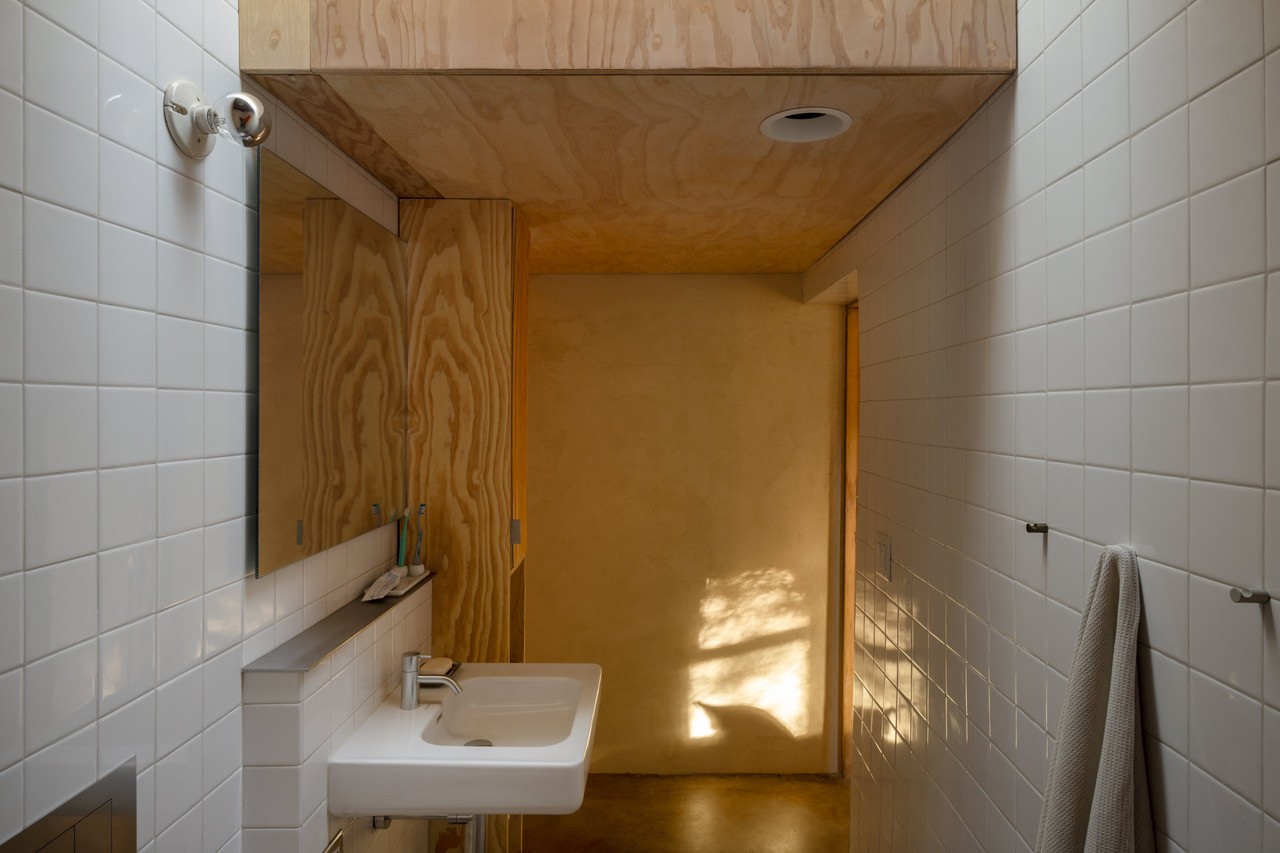
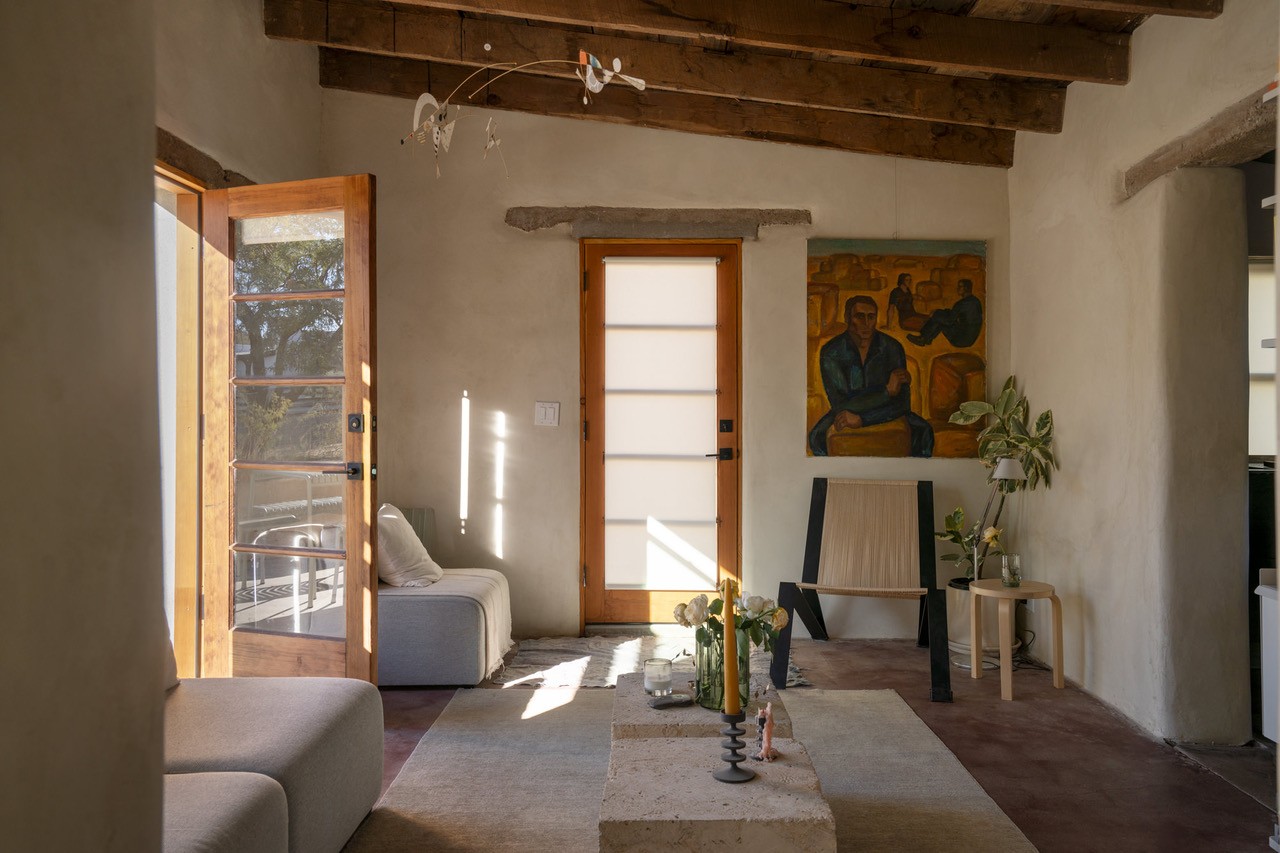
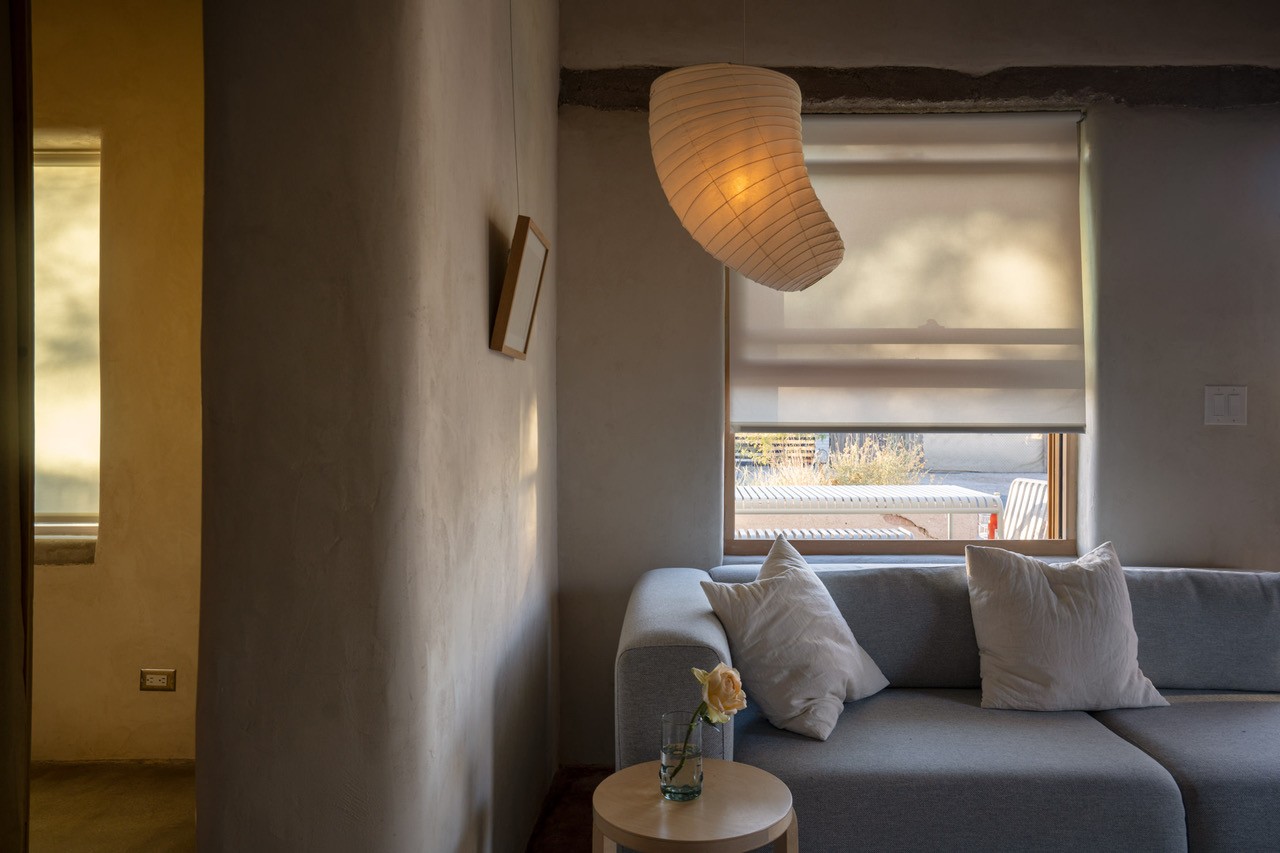
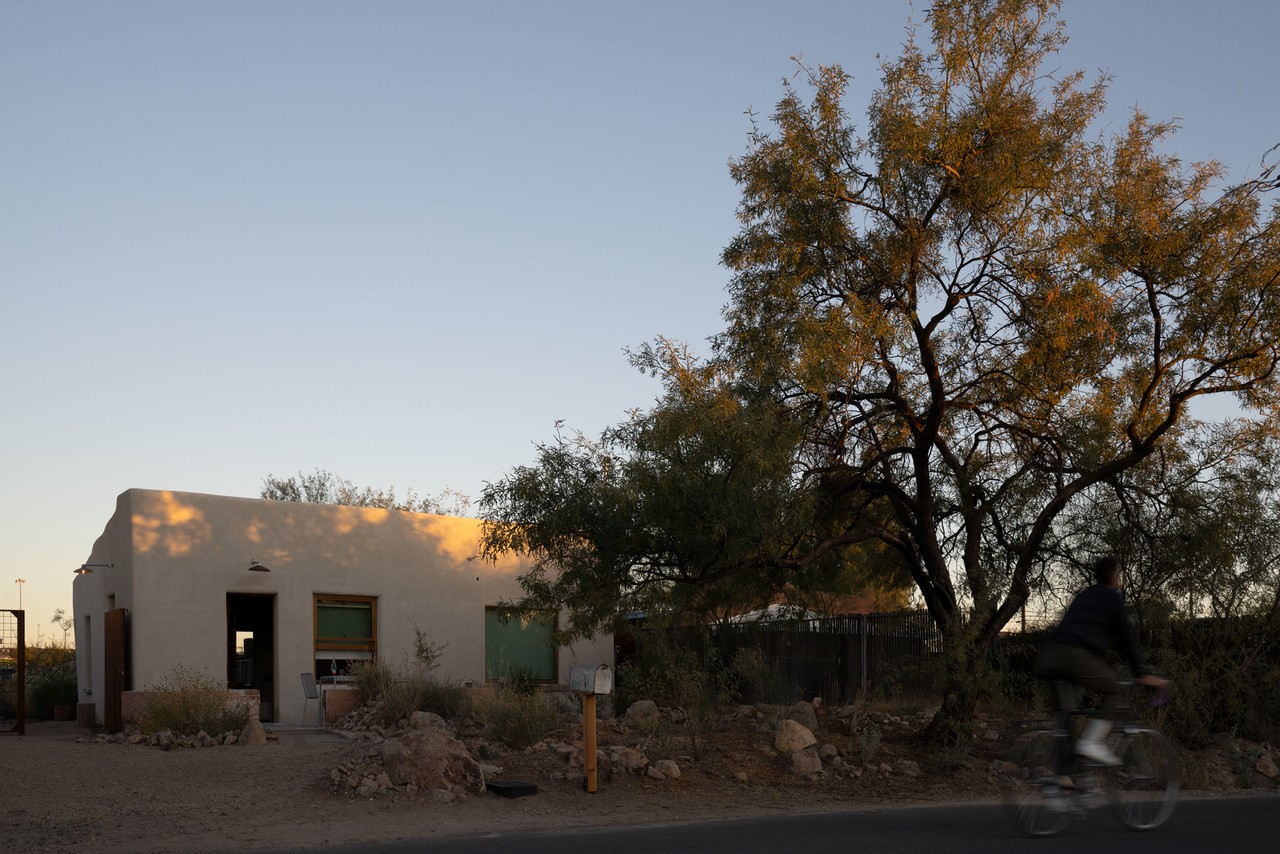
Photographer Logan Havens and designer Gustavo Silva were drawn to this 1930s adobe by its location in Barrio Kroeger Lane, one of Tucson’s oldest neighborhoods. Set along the Santa Cruz River and within biking distance of downtown, the house offered a strong connection to the city despite years of awkward additions and neglect. Beneath its cracked facade, they recognized the character of the original adobe and the potential to restore its simple plan. Their renovation honors the history of the house while introducing contemporary elements, including plywood-fronted cabinetry, a stainless-steel kitchen, and air-conditioning. The result is a thoughtful balance of old and new, shaped by the home’s material character and the rhythms of modern desert life. Here, Logan and Gustavo share more about the house, their approach to its restoration, and the experience of making it their own.
What attracted you to this home?
Logan - I’ve passed this house many times on my way to Desert Survivors. I don’t own a car, and the plant nursery is right on the loop, so I’d often stop by to buy native plants. When the time came to buy a house, I realized our options were limited. We wanted to live somewhere we could easily walk to a coffee shop, access public transit, or bike to get the things we need. Another priority was finding a simple, modest-sized house — one that would be manageable for a renovation I could take on.
To be clear, this house needed considerable work. But we had the patience and expertise of a Tucson community behind us. Darci and Anne were incredibly helpful and understanding, and so many people offered advice, took on parts of the project, or dropped off tools and beers. We felt confident we could make it work because we knew we had people we could rely on.
What changes did you make and why?
Gustavo and Logan - This house had so much potential to be restored to its original form. At nearly 100 years old, rooms were added over time as the family grew, and it developed a lot of character from people doing the best they could with what they had. It was a huge challenge to understand what the original house was, but we were ultimately drawn to the old adobe blocks, the pared-back style, the wood beams behind the drywall, and the simple layout. Even after we bought the house, we weren’t entirely sure what we had or what it would become — but we had enough clues to believe it would all work out.
The main changes were focused on reduction: how could we return the house to its best version of itself? We stripped everything back — removing layers of materials, clearing out clutter, and taking out modifications that had been made over time. Once we had it down to its core elements of adobe, wood, and concrete, we rebuilt with lime plaster, plywood, and steel.
What didn’t you want to change?
Gustavo and Logan - We felt a strong responsibility to preserve the original 726-square-foot adobe layout, and we were committed to restoring the adobe to its original window and door openings. This specific house’s value lies in its modesty and the honesty of its materials, and for us, that was paramount. The neighborhood is currently under consideration for a National Preservation Zone, we wanted this house to be an example of restoration of a house back to its original character.
How has your style evolved over the years?
Logan - Over the years, one of the biggest shifts in my style has been moving away from "fussy" things. For example, I get simple, durable plates from HF Coors. If one breaks during a dinner party, I know I can just ride my bike over and buy a new one. I’ve also embraced practical, easy-to-maintain items like wool rugs, or patterned napkins that I know I can clean if spilled on, or things that look fine if they are permanently stained. This approach extends to materials like plywood finishes and plaster walls — I choose them because I know how to maintain them easily, or I am fine when chipped or scratched. I do appreciate owning nice things, but I focus on items that are durable and repairable, rather than anything irreplaceable. The priority is making sure it’s cozy and comfortable when we spend time together with friends and family.
Describe your morning routine?
Gustavo - Mornings have become one of my favorite aspects of this house. I wake up before sunrise, make coffee, and prepare for a run. With the Loop directly out our front door, I’m just a minute away from views of the Catalina Mountains and Downtown. The path along the river is uninterrupted, with people walking, cycling, and even riding horses all sharing the space. I have time to get home, shower, eat breakfast, and then walk or bike to work in Barrio Viejo. It’s a small, island-like neighborhood with a direct connection to both nature and downtown.